
Copy-trading bots promise a simple deal: pick a wallet that wins, and when it buys, you buy. On Solana memecoins the deal has a catch built into it. The copier always trades second, at a price the followed wallet has already moved, and the wallet can sell straight into the copiers' buys. This guide follows one trade through a pool, then looks at where "smart money" labels come from and what one study found. It builds on What Is Slippage?, What Is a Sniper Bot? and What Is Holder Concentration?.
For the full video explanation, check out this YouTube video:
What a Copy-Trading Bot Does
A copy-trading bot watches a wallet you pick. When that wallet buys a coin, the bot buys the same coin for you, with an amount you set, either a fixed amount per buy or a share of the wallet's buy. Many can copy the sells too: on GMGN's bot, for example, when the wallet sells, the bot sells your position in proportion.
Tracking sites have made this one click. You pick a wallet from a leaderboard, press copy, and the bot takes it from there.
Why the Copier Always Buys Second
The bot only sees the wallet's buy once it is on the chain. Solana has no public queue where pending trades sit in view for long, so a bot cannot see the trade coming. The copier's buy always lands after the trade it copies.
And that first buy has already moved the price. In a pool, every buy pushes the price up (that is price impact). A sniper bot wins by being first. A copier is built to be second.
A Worked Example: The Wallet Sells Into Its Copiers
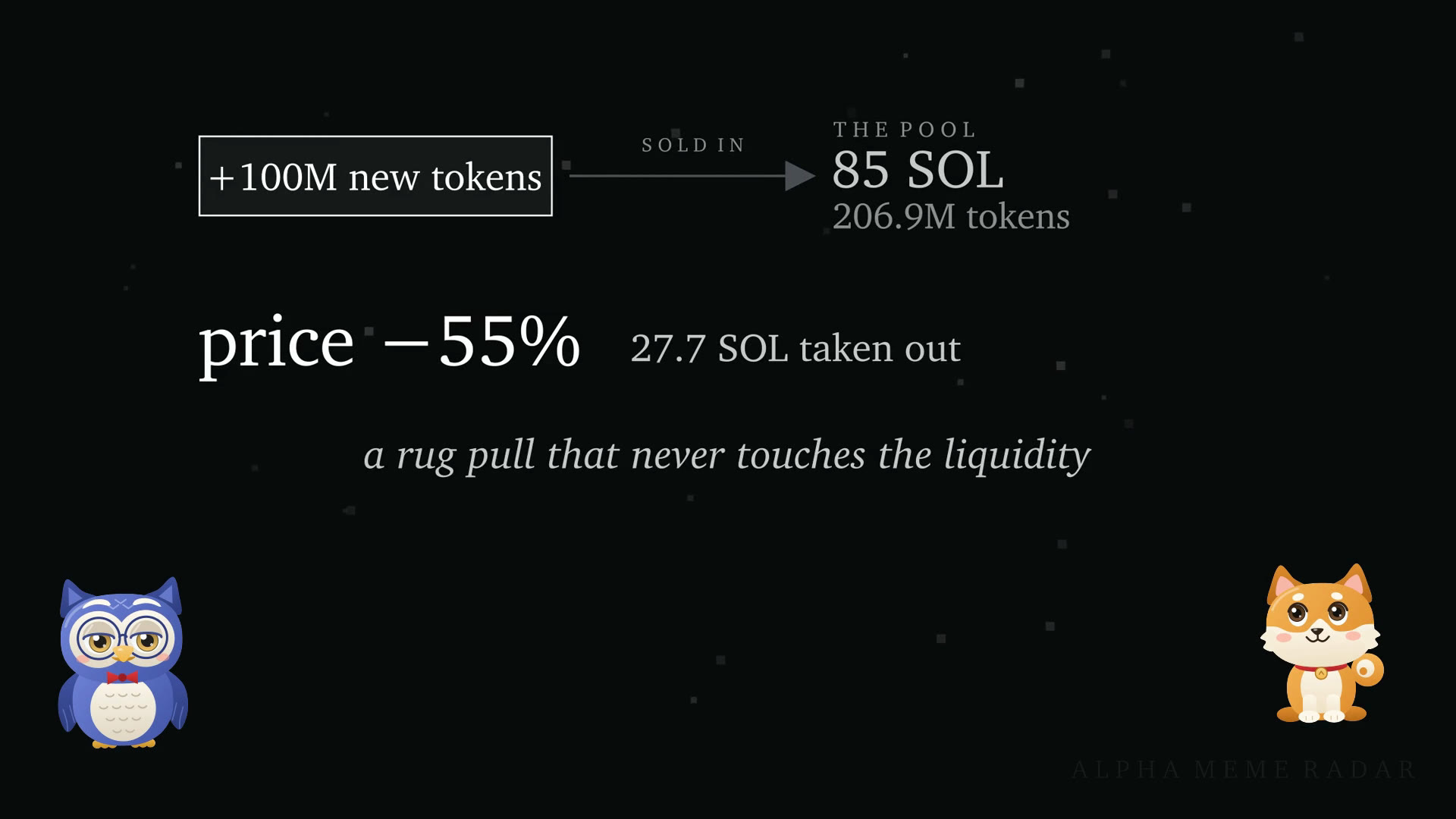
Take the pool from What Is a Liquidity Pool?: 85 SOL and 206.9 million tokens. The numbers below are an example, not a real coin or wallet, and leave out fees.
| Step | What happens | Price against the start |
|---|---|---|
| 1 | A followed wallet buys 5 SOL of the coin | 1.12× |
| 2 | Its copiers buy 20 SOL behind it | 1.67× |
| 3 | The wallet sells everything | 1.46× |
| 4 | The copiers sell everything | 1.00× |
Step 1. The wallet's 5 SOL lifts the price about 12% before any copier is in.
Step 2. The copiers' 20 SOL buys their tokens at prices the wallet has already pushed up. On average they pay about 29% more per token than the wallet did, and the price ends about two thirds higher than where it started.
Step 3. The wallet sells. Its 5 SOL comes back as about 7.4 SOL, a gain of almost half.
Step 4. If the copiers then sell, their 20 SOL comes back as about 17.6 SOL.
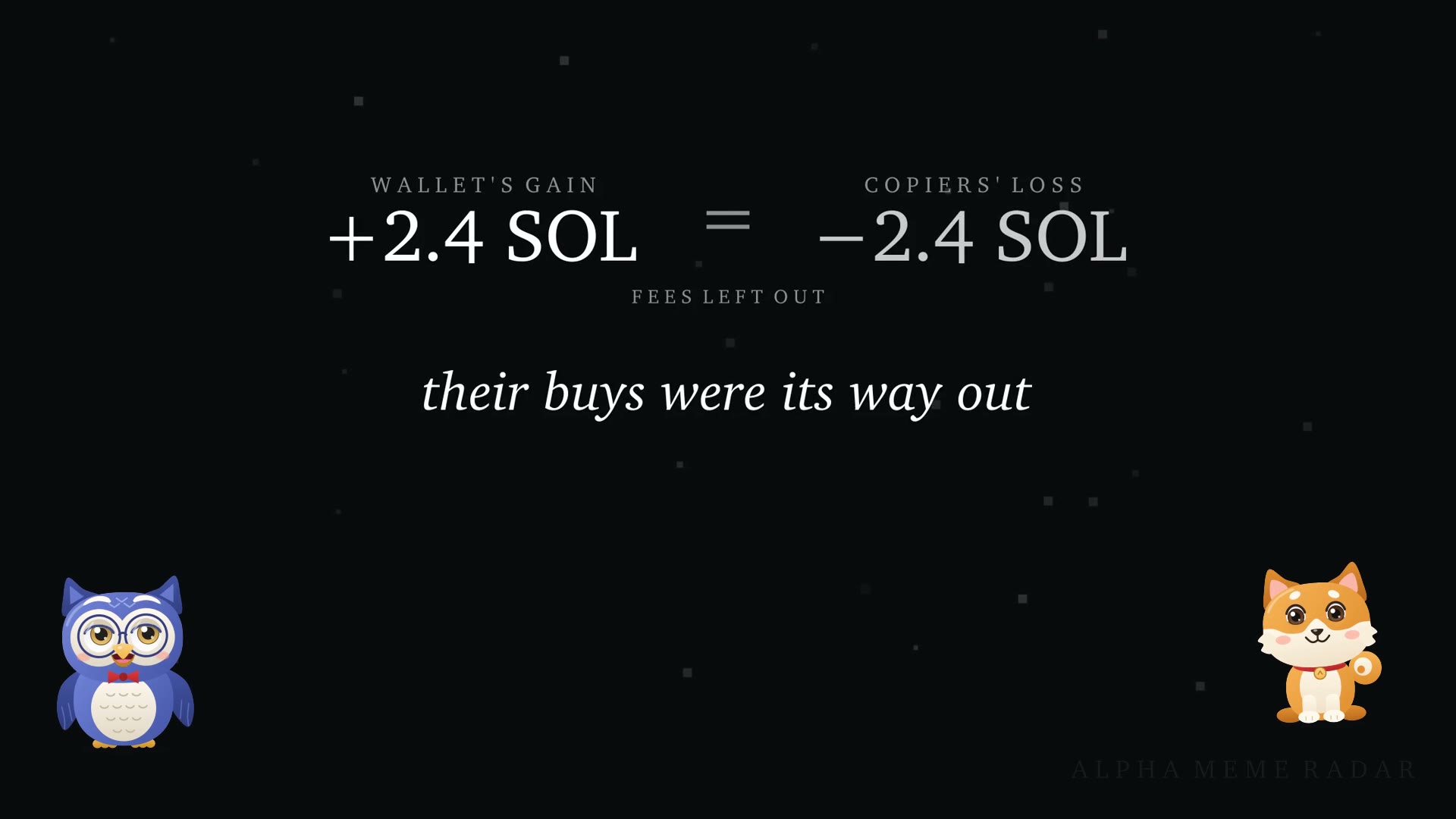
The wallet gained 2.4 SOL and the copiers lost 2.4 SOL. With fees left out, that is exact: once every token is sold back, the pool is where it started, so whatever one side took out, the other side put in. The copiers' buys were the wallet's way out.
Copying the Sell Does Not Fix It
A bot that copies sells still sells second. The wallet's sell lands first and lowers the price, and the copier sells after it, at a worse price. So the copier pays more going in and gets less coming out, on every trade it copies.
And the wallet can move its tokens to a second wallet first and sell from there. A bot that watches the first wallet sees tokens being sent, not a sell, so it may never sell at all.
Where "Smart Money" Labels Come From
A smart money label is a label on past trades. Tracking sites rank wallets by profit over a window, such as the last day, week or month, and tag the ones at the top. Nansen describes its smart money labels in terms of win rates, return on investment and realized profit over set periods. Jupiter's Top Traders ranks Solana wallets by profit and loss over 24 hours, 7 days or 30 days.
Nobody checks who is behind the wallet. Jupiter's own docs say it "does not endorse, verify, or audit any wallet shown", that past performance of any wallet does not predict future results, and that there is no guarantee a wallet showing profitable trades is not engaged in manipulative behavior.
As with the holder list, a wallet is not a person. One trader can run many wallets, and build a winning history on one of them on purpose.
What One Study Found
Researchers from UCL, the University of Hong Kong and Nanyang Technological University studied copy trading on pump.fun coins (Luo, Feng, Xu and Liu, presented at the ACM Web Conference 2026). Their threat model is the trap above: an operator picks a wallet with a profitable history to attract copiers on tracking sites, buys early, spreads its position over several wallets, and then sells into the copiers. They model it as close to zero-sum: the operator's profit comes from the copiers' losses.
They then modeled copiers on more than 6,000 meme coins, giving each copier the worse price that comes from trading right after the wallet it copies:
- Even when the copied wallets made money, the copiers made less.
- With the study's simpler ways of picking wallets, the copiers lost money on average, while the wallets they copied were in profit.
- With the study's best wallet picker, the copied trades averaged a 14% return and the copiers an estimated 3%.
These copier returns are modeled from on-chain trades, not measured from real copier wallets.
Before You Copy a Wallet
1. Look at its trades, not its label. Does it sell right after the buyers pile in?
2. Keep your buys small next to the pool. The smaller the pool, the more the wallet's own buy has already cost you.
3. Remember you are always second. Whatever the wallet made on a trade, you will make less. Fees and failed fills come on top: copying often makes fees a larger part of the cost, and a tight slippage setting can leave orders unfilled when the price moves fast.
What This Guide Does Not Cover
How to set up any one copy-trading bot, copy trading on centralized exchanges, and wallet-tracking alerts used without automatic buys. The worked example uses made-up trades on a real pool size, with fees left out.
Key Takeaways
- A copy-trading bot buys after the wallet it copies, so it pays a price that wallet has already moved.
- Copying the sell does not help: the copier sells second too.
- A followed wallet can sell into its own copiers. With fees left out, its gain is their loss.
- Smart money is a label on past trades. Nobody verifies who is behind the wallet.
- One study found copiers made less than the wallets they copied, and lost money on average with simpler ways of picking wallets.
This article is for education only and is not financial advice.