
Everyone says to check the pool before you buy. But what is a pool? It is two piles of money held by a program, and anyone can trade against them. Those two piles set the price, decide how much a buy costs you, and hold all the money holders can sell into. This guide ties together What Is Slippage?, What Is a Bonding Curve? and What Is a Rug Pull?.
For the full video explanation, check out this YouTube video:
What a Pool Holds
A pool holds two sides. For most memecoins on Solana, that is SOL on one side and the coin on the other.
Take a pump.fun coin that has just finished its bonding curve. From pump.fun's published settings, it graduates with about 85 SOL raised. That SOL and the 206.9 million tokens still in the curve move into a new PumpSwap pool.
Nobody Sets the Price
The price is one side divided by the other:
85 SOL ÷ 206,900,000 tokens = about 0.00000041 SOL a token
That is the same price the bonding curve ended on, so the coin carries on where it left off.
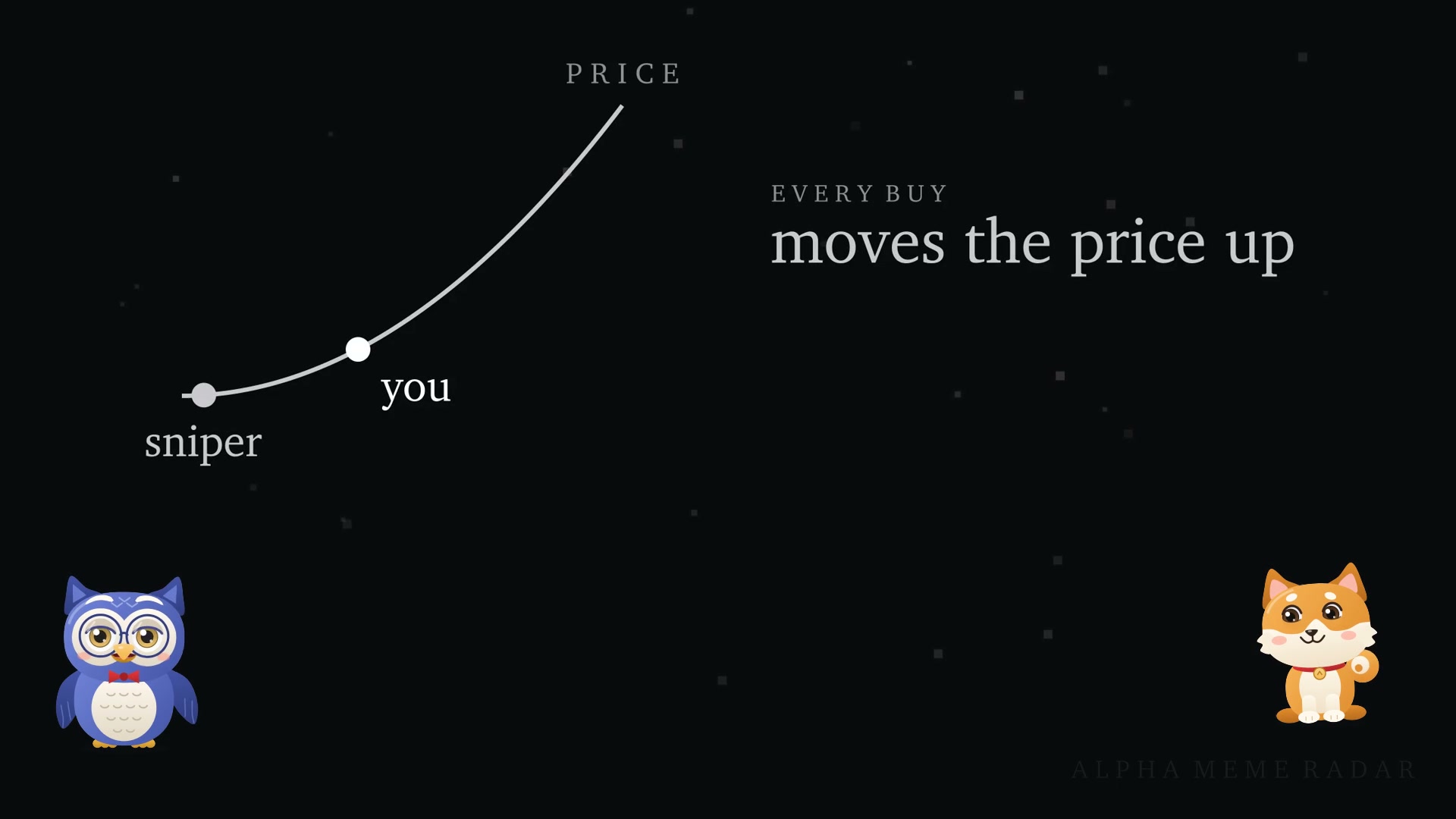
When you buy, your SOL goes into the pool and tokens come out. The SOL side grows, the token side shrinks, and the price goes up. A sell does the reverse. In the no-fee model, the pool keeps the two sides multiplied together the same after every trade, the x * y = k rule from What Is Slippage?. With fees, the fee is added to the reserves, so the product grows slightly.
Why a Thin Pool Costs You
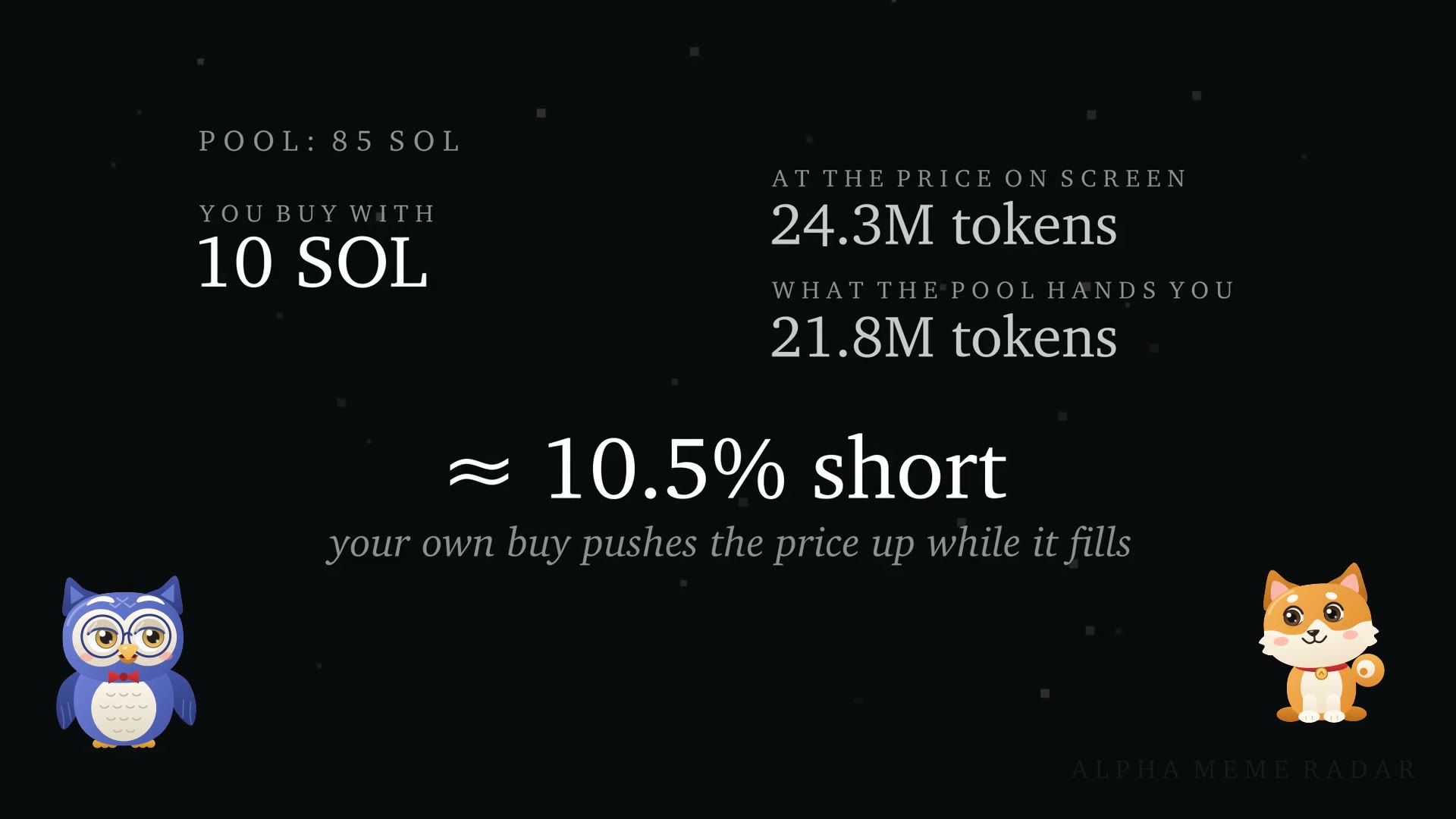
Your buy moves the price while it fills, so you get fewer tokens than the price on screen promised. How many fewer depends on your trade next to the pool:
| Your buy | Pool | Tokens at the price on screen | What the pool hands you | Short by |
|---|---|---|---|---|
| 1 SOL | 85 SOL | 2.43 million | 2.41 million | about 1.2% |
| 10 SOL | 85 SOL | 24.3 million | 21.8 million | about 10.5% |
| 10 SOL | 8,500 SOL | 24.3 million | 24.3 million | about 0.12% |
The same 10 SOL buy comes up short about 10.5% in a fresh 85 SOL pool, and about 0.12% in a pool a hundred times deeper.
That is why the number to look at is the SOL in the pool, not the market cap. The SOL side is all the money every holder can sell into.
Who Fills a Pool, and the Fee
On an ordinary pool, the money comes from liquidity providers. They put in both sides at the current price, and the pool gives them LP tokens, a receipt for their share. Redeeming those LP tokens burns them as part of paying out their share of both sides. That is different from the permanent burn in the next section, where the tokens are destroyed with no payout, so nobody can withdraw that liquidity.
Every trade pays a fee, and on most pools a large part of it goes back into the pool for the providers. That is why anyone lends a pool their money. Uniswap version two, which popularized this design, paid its whole 0.30% fee to providers. Raydium's standard pools charge 0.25%, of which 0.22% goes to providers.
On a coin fresh from pump.fun the split is different. From pump.fun's fee page, a PumpSwap pool under 420 SOL of market cap charges:
| Goes to | Share of each trade |
|---|---|
| pump.fun (the protocol) | 0.93% |
| The coin's creator | 0.30% |
| The pool (LP fee) | 0.02% |
| Total | 1.25% |
The fee steps down as the coin's market cap grows, to 0.30% at the top tier. Trades placed through pump.fun's own web or mobile app also pay a 0.45% platform fee.
How Pools Stay in Line
If a pool's price drifts away from other markets, bots buy where it is cheap and sell where it is dear until the gap closes. That arbitrage is how one coin's pools keep roughly the same price.
LP Burned and LP Locked
Whoever holds the LP tokens can take their share of both sides back out. If one wallet holds them all and pulls it all, that is a rug pull.
- Burned: the LP tokens are gone for good, so that liquidity can never come out.
- Locked: the LP tokens are held in a locker contract, often until a set date. When the lock ends, they can move again.
When a pump.fun coin graduates to PumpSwap, the LP tokens for its new pool are burned. On Raydium's LaunchLab, part of the graduation LP is burned and the rest is locked through LP-Lock.
Burned Is Not the Same as Safe
A burned pool is safe from a pull, not from a dump. Sellers still take SOL out every time they sell.
Say early holders sell 100 million tokens into our fresh pool:
| Before | After the sell | |
|---|---|---|
| SOL in the pool | 85 | about 57.3 |
| Tokens in the pool | 206.9 million | 306.9 million |
| Price | down about 55% |
The sellers take out about 27.7 SOL, and the liquidity was burned the whole time.
Before You Buy
1. The SOL in the pool, next to the size of your trade. A buy that is a tenth of the pool's SOL comes up about 10% short.
2. Whether the LP is burned or locked, and if locked, until when.
3. Who holds the supply. A few wallets with a big share can dump into any pool.
What This Guide Does Not Cover
The price-impact numbers leave out fees, which make every fill a little smaller. Concentrated-liquidity pools (Uniswap v3) put their depth in a price range, so they can be deeper near the current price and empty outside it. Impermanent loss, how a provider can end up worse off than if they had simply held the two coins when the price of one coin against the other moves away from where it was at the deposit, is a separate topic. The 85 SOL figure comes from pump.fun's documented defaults and could differ from the live settings; the other numbers are a worked example, not market data.
Key Takeaways
- A liquidity pool is two piles: SOL and the coin. The price is one divided by the other.
- Every buy and sell moves both sides. In the no-fee model the product of the two stays the same; fees make it grow slightly.
- A thin pool fills your buy short: 10 SOL into 85 SOL comes up about 10.5% short.
- LP tokens are the receipt for the pool. Burned means nobody can pull it; it does not stop a dump.
- Check the SOL in the pool, not the price.
This article is for education only and is not financial advice.