
A memecoin launches, and an hour later the chart says it has a $100,000 market cap. Nobody has put in $100,000. In some launches nobody has put in anything at all. This guide explains where that number comes from, how one-sided liquidity works, and why the money in the pool, not the market cap, decides what your bag is really worth.
For the full video explanation, check out this YouTube video:
What Is Market Cap?
Market cap is one multiplication:
market cap = price of one token × number of tokens
That is all it is. It is not money that was paid in, and it is not money you can take out. It takes the price of the last trade and applies it to every token that exists, including the ones that have never traded.
How a Coin Starts with a Market Cap and No Money
Say you create a coin with 1 billion tokens. You put all of them into a trading pool and pick a starting price of $0.0001 per token.
1,000,000,000 × $0.0001 = $100,000 market cap on day one.
How much ETH is in the pool? Zero. This setup is called one-sided liquidity (or single-sided liquidity). On a concentrated-liquidity exchange such as Uniswap v3, you can deposit only your own token, starting at a price you choose. The pool will sell those tokens to buyers as the price climbs, but it holds no ETH until somebody buys.
So the $100,000 is a price tag. Nothing has been bought at that price yet.
What Happens When People Buy
Every buyer puts ETH into the pool and takes tokens out. Fewer tokens left in the pool means a higher price for the next buyer.
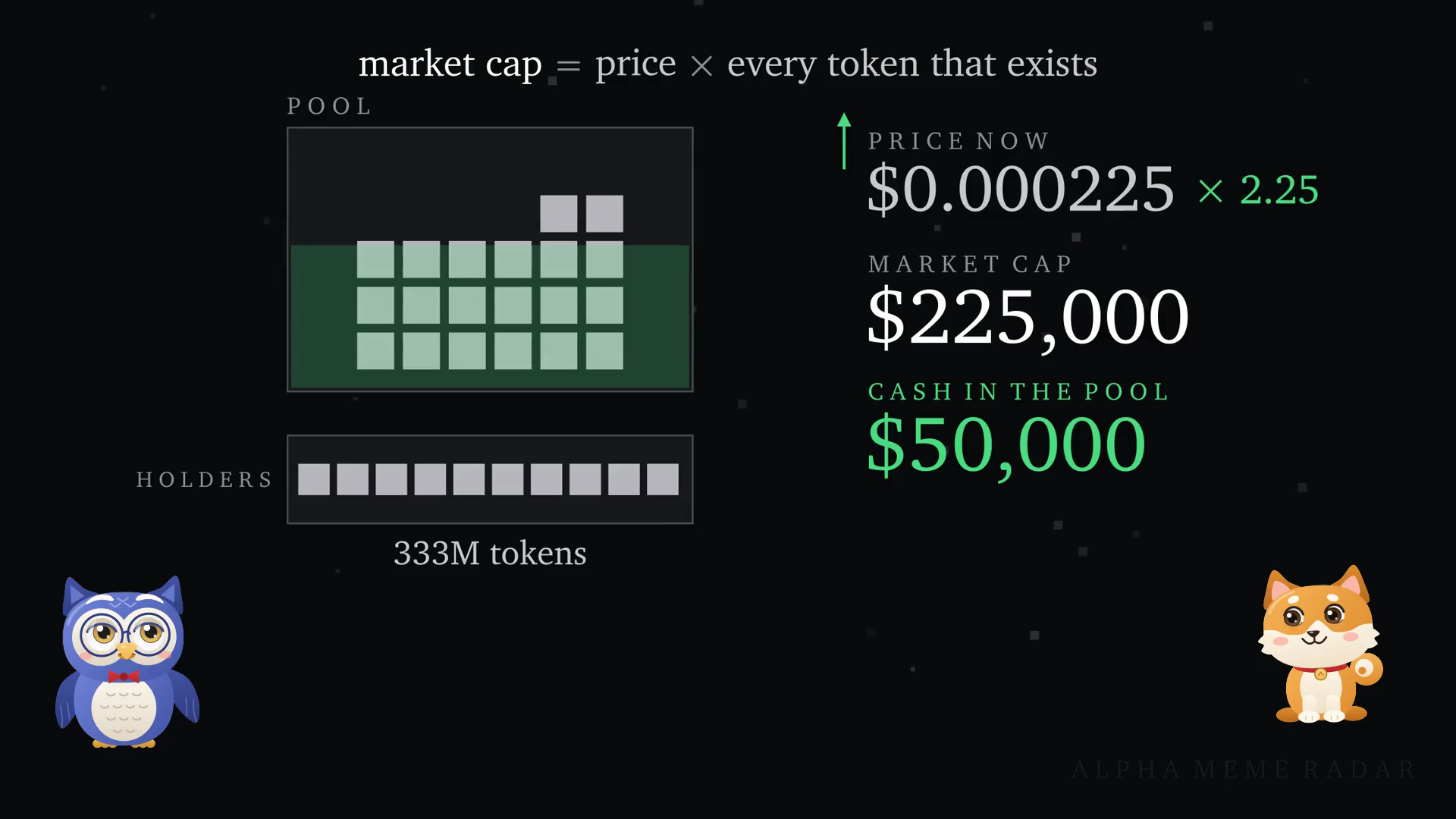
Let's say buyers put in $50,000 of ETH in total:
- They receive about 333 million tokens, a third of the supply.
- The price rises from $0.0001 to $0.000225, 2.25 times higher.
- The market cap now reads $225,000.
The market cap went up by $125,000. Only $50,000 came in.
Paper Value vs Real Money
Those holders own 333 million tokens at a price of $0.000225. On paper that is $75,000.
Now count the ETH in the pool: $50,000. That is the only real money in the whole coin.
| Amount | |
|---|---|
| Market cap | $225,000 |
| Holders' tokens, on paper | $75,000 |
| ETH actually in the pool | $50,000 |
If every holder sells, the pool pays out exactly the $50,000 that came in. Not $75,000, and nowhere near $225,000. Trading inside one pool is zero-sum before fees: the ETH that sellers take out is the ETH that buyers put in.
The Floor
As holders sell, tokens go back into the pool, ETH comes out, and the price slides down the same path it climbed. When the last token is sold back, the market cap is at $100,000 again and the pool holds zero ETH.
That starting price is the floor in this setup. Below it there is no ETH left to sell into, so nobody can sell lower. It also means a coin sitting at its starting market cap has nothing behind it, however large that number looks.
Two things move the floor in real launches:
- Tokens held outside the pool. If the team kept 20% of the supply, they can sell it into the buyers' ETH at any time.
- Liquidity that can be removed. If the pool's liquidity is not locked or burned, whoever owns it can pull the ETH out.
What Your Bag Is Really Worth
Even one holder cannot sell at the chart price, because each token sold pushes the price down for the next one. This is price impact. Selling into the example pool (333 million tokens out, $50,000 of ETH in):
| You sell | Value at chart price | You actually receive | Lost to price impact |
|---|---|---|---|
| 10M tokens (1% of supply) | $2,250 | about $2,220 | about 1.5% |
| 100M tokens (10% of supply) | $22,500 | about $19,600 | about 13% |
| 333M tokens (everything held) | $75,000 | $50,000 | about 33% |
The bigger your bag is compared with the pool, the less of its paper value you can turn into ETH. That is before swap fees, which usually take another 0.3% to 1%.
Why ETH Is the Number That Counts
The pool pays you in ETH (or SOL, or a stablecoin, depending on the chain). ETH trades on every major exchange with deep order books, so you can turn it into dollars at close to its quoted price. Your memecoin can only be turned into whatever ETH its own pool holds.
So the useful question is not "what is the market cap?" It is:
- How much ETH is in the pool?
- How much of it can my sell pull out?
How to Check Liquidity Before You Buy
- Look at liquidity next to market cap. A $5 million market cap on $30,000 of liquidity means a few sells can move the price a long way.
- Know what the liquidity figure includes. Many chart sites count both sides of the pool, the coin and the ETH. Only the ETH side is money you can leave with.
- Check top holders. Large wallets outside the pool are future sell pressure on the same ETH.
- Check whether liquidity is locked or burned. If it is not, it can be removed.
- Use the swap preview. Enter your full sell size on the exchange and read the price impact before you buy, not after.
Other Ways Coins Launch
The same idea applies everywhere; only the starting point changes.
- Two-sided pools. The creator adds both tokens and some ETH. The coin starts with real money in the pool, but the market cap is still price × supply and is still far larger than the ETH.
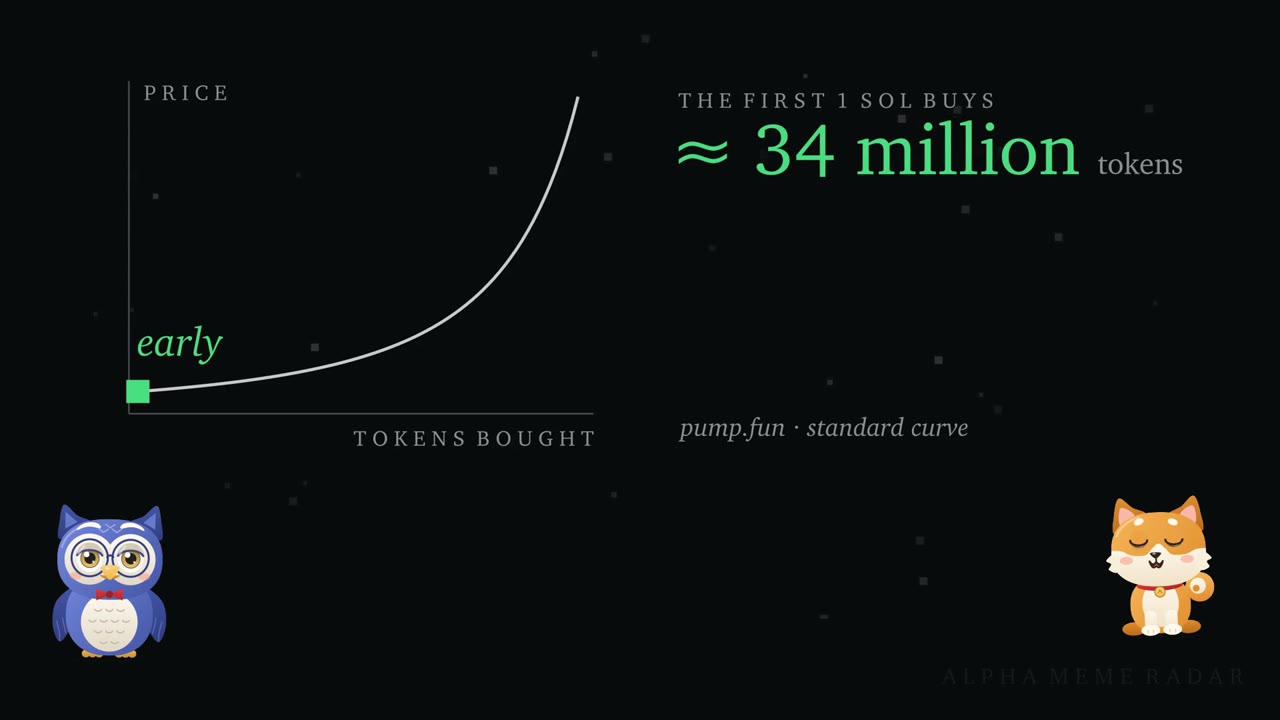
- Bonding curves. Launchpads such as pump.fun sell tokens along a preset price curve. Buyers' SOL collects in the curve and later becomes the pool. The market cap climbs much faster than the SOL collected.
If you want to create your own token, see our guides on how to launch a memecoin on Pump.fun and how to launch a memecoin on Bonk.fun. If you trade with borrowed money, read How Leverage Works in Crypto first.
Key Takeaways
- Market cap is price × supply. It is a price tag, not money paid in.
- With one-sided liquidity a coin can start at any market cap with zero ETH in its pool.
- The ETH in the pool is the only real money. Holders together can never take out more than that.
- Your bag is worth what the pool will pay for it, and big bags get much less than the chart price.
- Before you buy, compare liquidity with market cap, check top holders, and check that liquidity is locked.
Next: What Is a Rug Pull? Who Can Take the Money Out of a Memecoin's Pool
This article is for education only and is not financial advice.