Supanova opened Canton's first memecoin launchpad on November 3. Here is the step-by-step process, plus what the liquidity numbers look like a week later.
Canton was built to move institutional money. Now anyone with a Google account can launch a memecoin on it.
Supanova Opens Canton to Memecoins
More than a week after Supanova switched on its token launchpad, the useful question is no longer whether Canton Network can host memecoins. It's whether anyone is still trading them. The launch itself comes from the company: Supanova, a wallet and trading app built for Canton Network, says it opened the launchpad on November 3, and its own November 9 release describes a single app where users create a token, trade it and follow it through graduation. CantonNews covered the launch the next day.
The liquidity page as of November 11 shows 5 pools loaded, $496.9K in total value locked and 24-hour volume of 451K CC. Compare that with what the same dashboard reported on November 4, the day after launch: 9.73 million CC in 24-hour volume, about $247,600 in total value locked and 15 loaded pools.
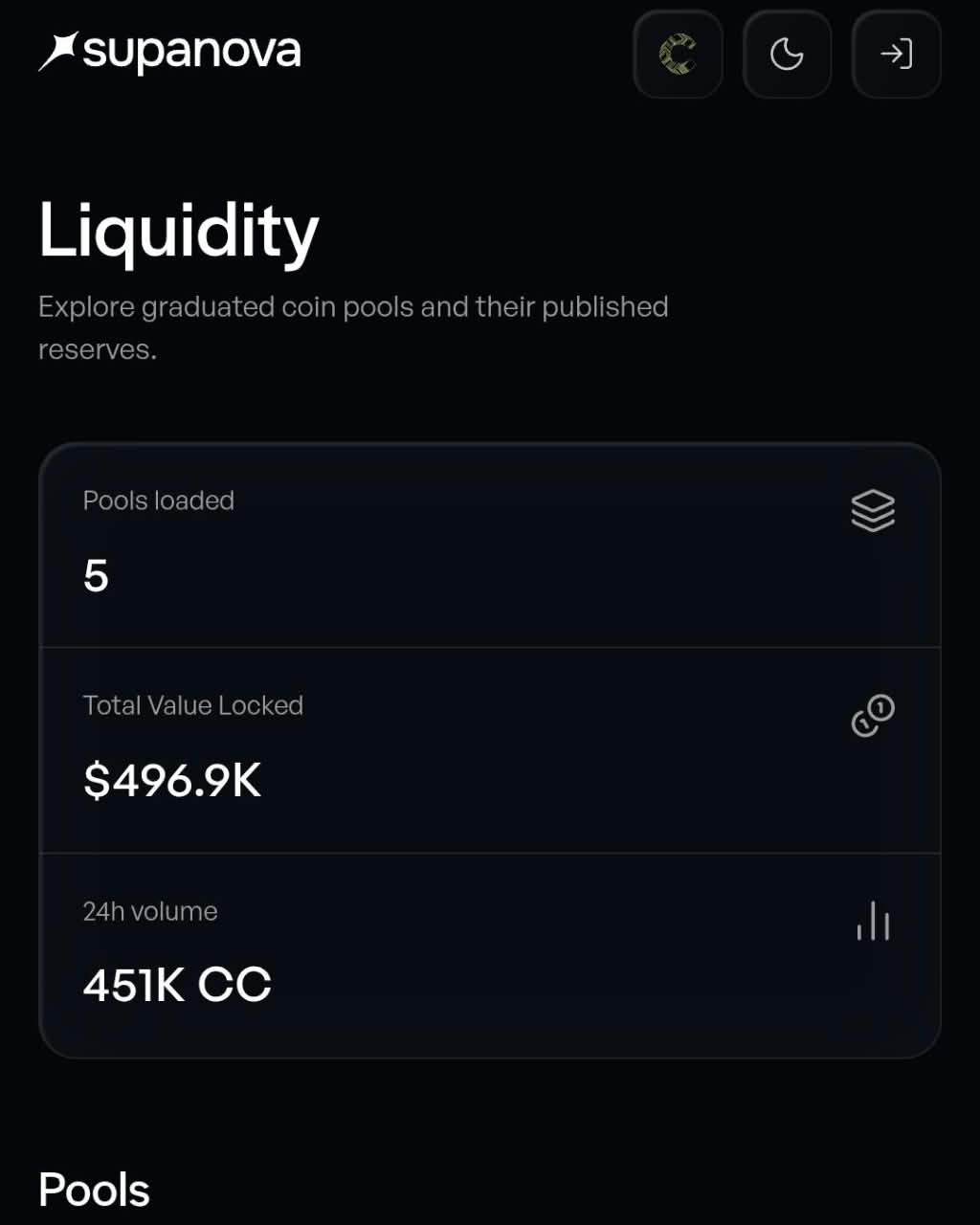 Two shifts stand out. Volume has fallen about 95% in a week, which tells me launch-day excitement cooled fast. Total value locked has roughly doubled over the same stretch, from $247.6K to $496.9K, even though fewer pools are showing as loaded. The page also still says adding liquidity isn't available yet, so only the platform's graduated pools hold funds.
The process itself runs from sign-in to graduation, and it starts with a wallet.
Step One: Sign In and Fund a Wallet
Start at supanova.app. The app offers a self-custodial wallet for holding, sending and swapping Canton assets, and sign-in works with email, Google or Apple. No browser extension is required, since Privy supplies the sign-in and wallet infrastructure. Supanova's terms require users to be at least 18 and allowed to use the service where they live.
Next comes funding. Every trade on the launchpad runs against CC, so a launch or a buy needs a balance. Funding routes took a hit during launch week. In a November 5 update, the company said available CC liquidity on some routes had temporarily run out, and it restored liquidity through Squid. If one route fails, try another.
Step Two: Create the Token
Creating a token takes just a few inputs: a name, artwork and a ticker, the short label that identifies the token in trading. This is the creative part, and it is where memecoins live or die. A coin needs a shared joke, a character or a community identity, and the launchpad supplies the market once that exists.
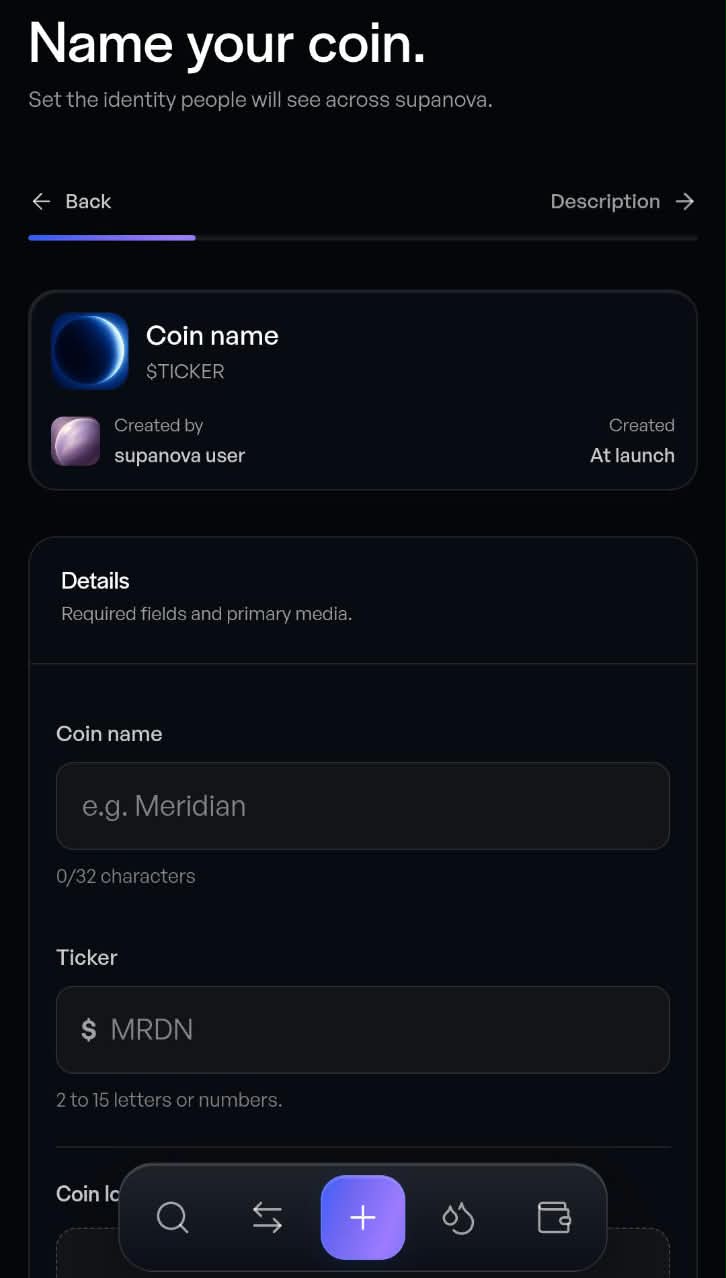 Supanova runs creation inside the same app where people find and trade tokens, which matters for distribution. A new coin appears in the directory right beside every other launch, so a strong name and image do real work.
The app also spells out any fees creators can earn and the conditions attached. Those rules decide whether launching pays at all, so they deserve a careful read before committing.
Step Three: Trade the Bonding Curve and Graduate
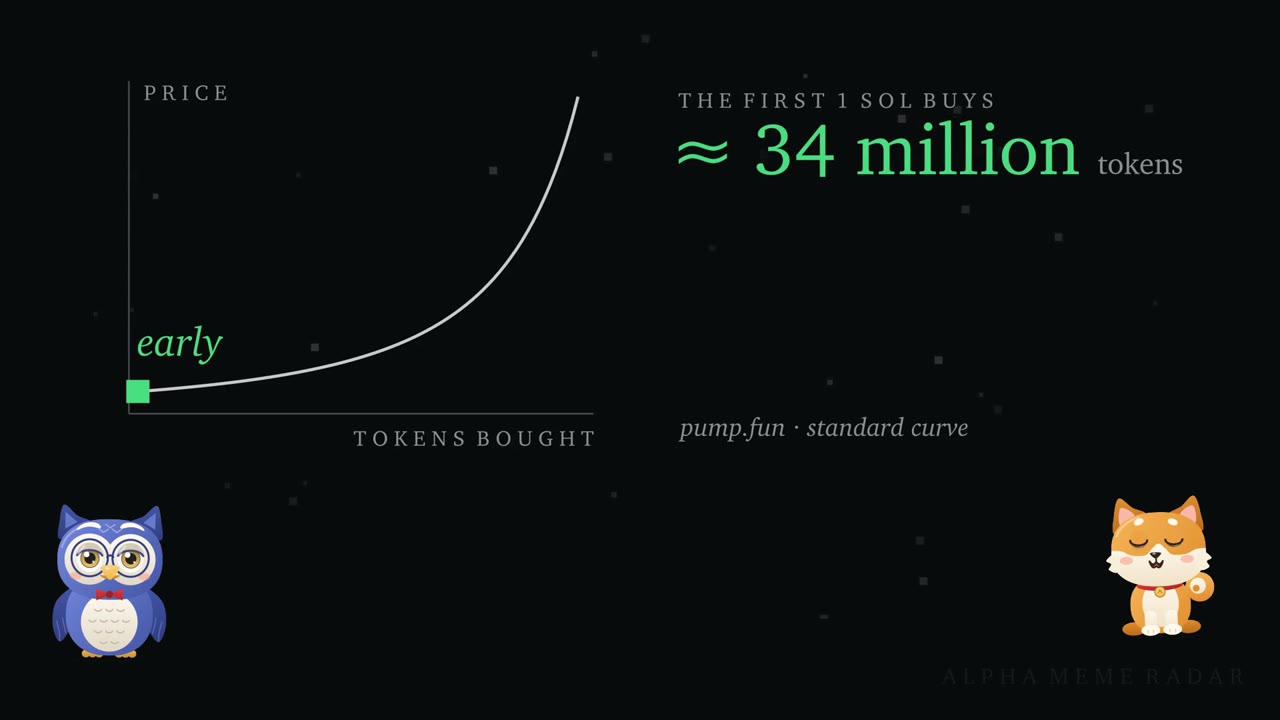
Once a token exists, trading starts on a bonding curve. This is a formula that adjusts the price as people buy and sell against CC, so the market works from the first trade without a pre-funded pool. Buyers push the price up the curve, and sellers pull it down.
If the curve completes, the token graduates. Trading then moves into a liquidity pool behind the same swap screen, so buyers and sellers keep using the same interface. Supanova calls this its own automated market maker, and the distance to graduation tells a buyer how much of the run is behind or ahead.
Two numbers matter on the trade screen. Price impact shows how much an order moves the price, and minimum received shows the lowest amount a swap will accept.
Quadrillions ($QUADRILLIONS) shows what graduation looks like. It launched November 3 and graduated by the next day. On November 4, its market page showed about $494,500 in 24-hour volume across 953 trades, a market cap near $2.46 million and one quadrillion tokens in supply. Those figures work out to an average trade near $520 and daily turnover of about a fifth of its market cap, a rough calculation from the page's numbers and not something Supanova reports. The token is an independent community project, and Digital Asset hasn't sponsored or endorsed it.
What the Fees and the No-Mempool Design Mean
Two design claims set Supanova apart. The first is that trading carries no gas fees, meaning no charge for processing transactions on the network. That doesn't make trading free, though. Separate trading fees apply, and the Quadrillions pool displayed a 1% fee.
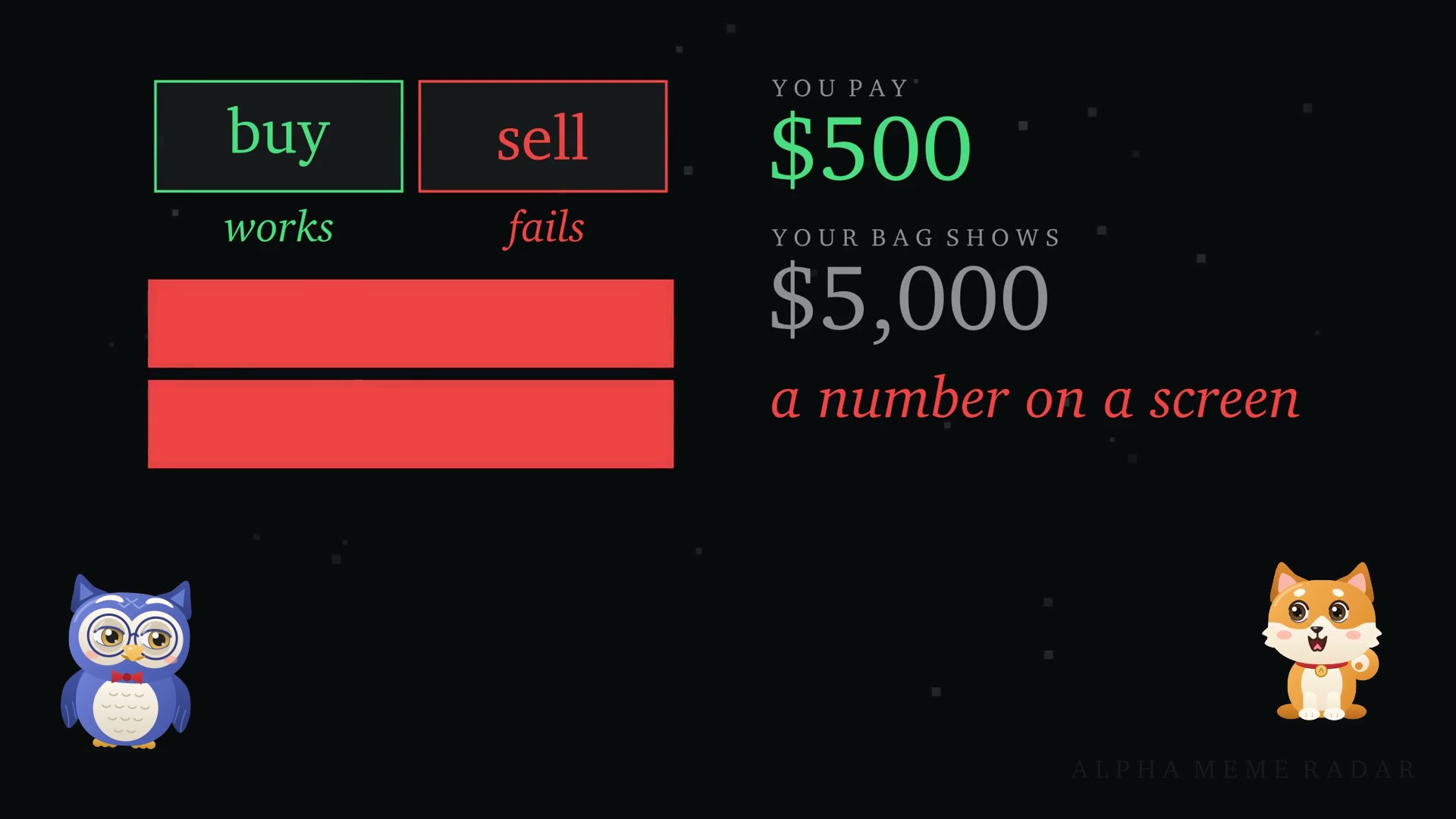
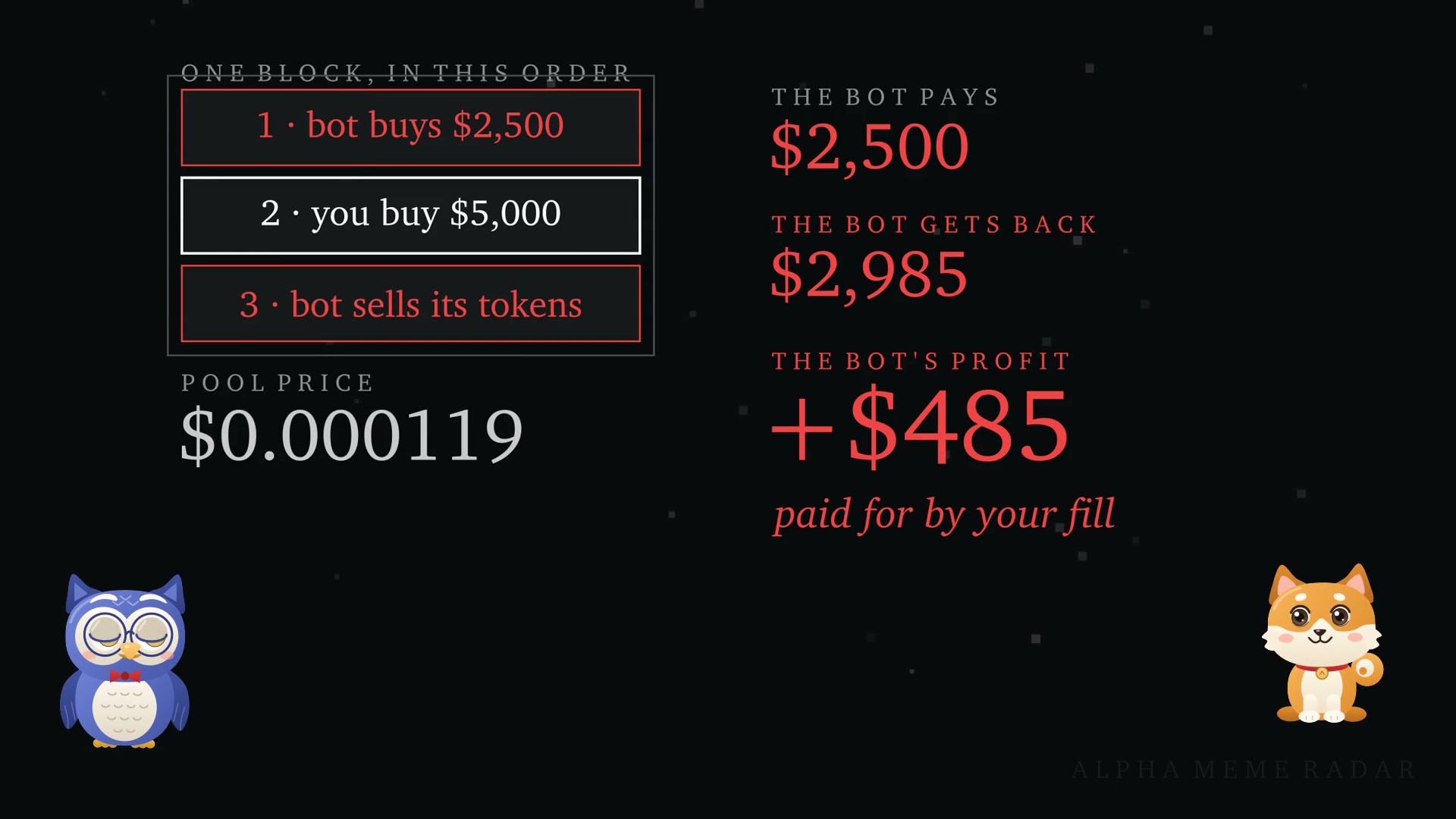
The second claim is MEV resistance. On most chains, pending transactions sit in a public queue called a mempool, where bots can spot an order and trade ahead of it, a tactic known as sandwiching. Canton has no public queue of pending transactions. Supanova says that removes the visible orders sandwich bots rely on, which gives buyers a fairer starting point.
The company is careful about what that promises. Its release says prices can still move sharply, liquidity can be thin and tokens can fail. Fairer execution doesn't guarantee a token will succeed, and that is the right framing: the design protects buyers from one kind of predator, not from a coin nobody wants.
Risks Before You Launch or Buy
Memecoins are speculative, and most lose their value. Supanova's risk disclosure covers copied identities, technology failures and lost account access, and it states that a listing or a graduation is not an endorsement or a safety check. Anyone can launch a token, lookalikes of real projects included, so buyers should match a ticker and its artwork against a project's official accounts before putting money in.
Thin liquidity is a practical danger too. With total value locked near $497K across five pools, a large order moves prices sharply, and a token with a small pool can be hard to sell at a fair price. Position sizes should stay small enough that a total loss won't hurt.
For creators, the lesson is simple. The launch takes minutes, while keeping a community active takes work, and the 95% drop in volume since launch week shows how quickly attention moves on. Supanova's own pitch is that its model gives creators a reason to stay engaged beyond launch day. Whether that holds depends on the fee terms and on whether people keep trading.
Whether the launchpad becomes a lasting part of Canton hinges on repeat activity, not the first week's volume. If it draws users and funds from outside the network, it could introduce more people to Canton's wallets and apps. The liquidity page says people are still trading, and the next few weeks will show whether they stay.
If you are looking to explore alternative platforms like the OG Pump.fun, make sure to check out our tutorial on How to Launch your Memecoin on Pump.fun. Base and Solana currently stand out as two of the best networks for deploying a fresh meme coin, and we highly recommend using either chain for your launch.