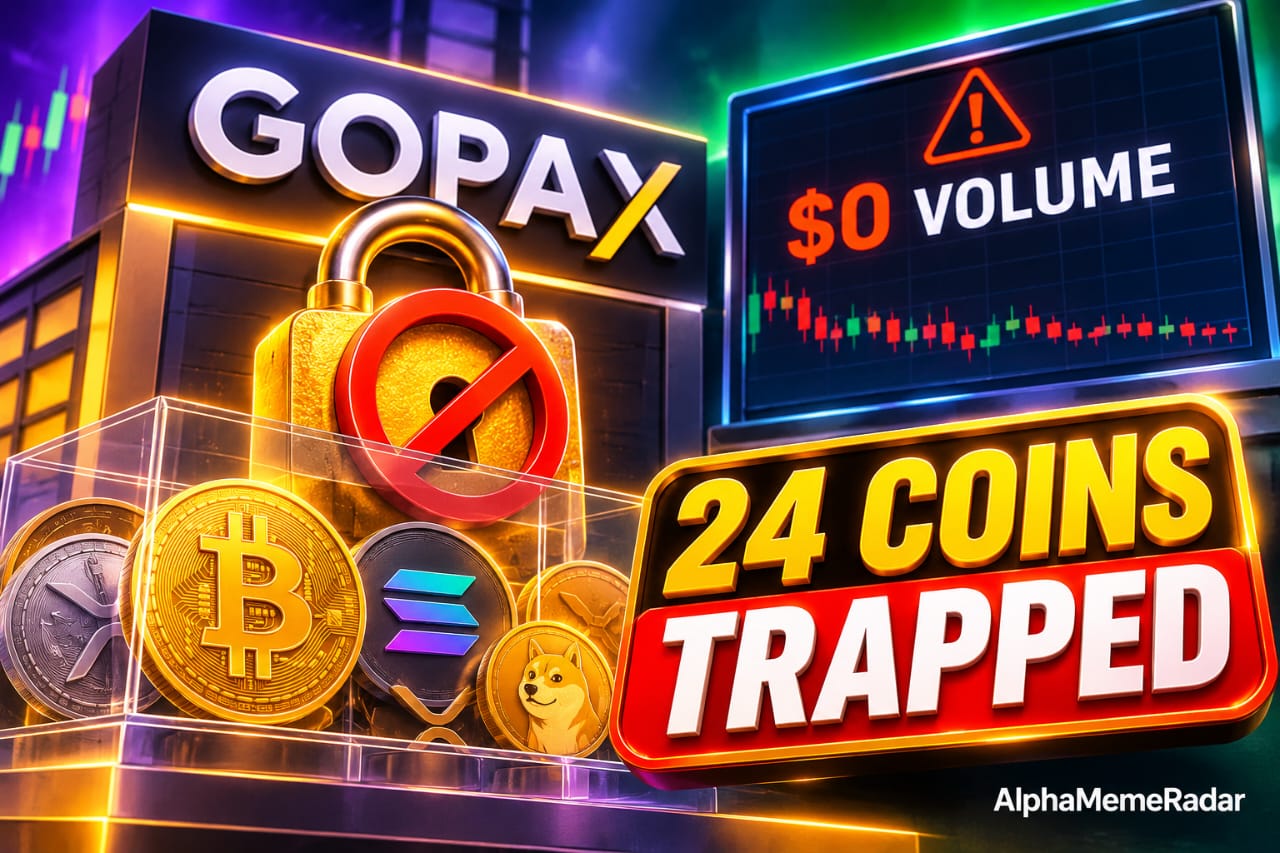
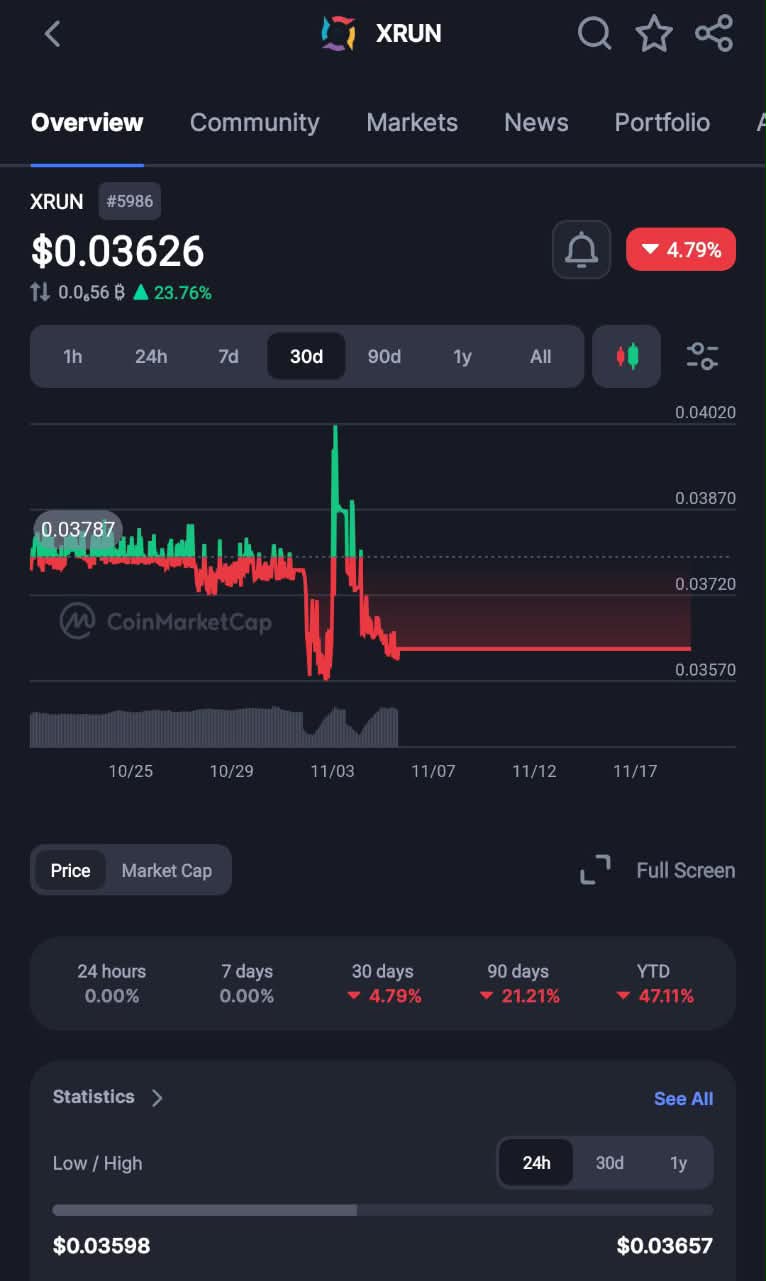
XRUN’s price chart has gone flat. No trades have crossed GOPAX’s order book since November 6, and by November 18 the token’s 24-hour trading volume sat at zero dollars.
 XRUN is one of 24 coins listed only on GOPAX among South Korea’s five major exchanges. The exchange has been dark for nearly two weeks with no restart date, so holders can’t sell at home, and abroad the doors are barely ajar.
A Threat Email and a Shutdown Within the Hour
GOPAX suspended deposits and standard withdrawals on November 6 after it received an email threatening a hack. The deposit and withdrawal halt began at 2:55 p.m. local time, and trading stopped at 3:53 p.m. The exchange also canceled all unfilled orders.
Nobody has reported a theft. A GOPAX official said the exchange had not confirmed the threat was real, but that asset protection would come first even if users were inconvenienced. A representative added that no hack or attempted theft had been detected when the suspensions were announced. Put simply, GOPAX pulled the plug on a threat, not on a breach.
The original halt reports also carried a warning from rival exchange Coinone, which told customers on November 6 not to send crypto to GOPAX because incoming transfers might not be credited normally.
What GOPAX Has Done Since November 6
The exchange moved customer assets into offline storage. GOPAX cited recent leaks and hacking incidents at financial institutions, along with recommendations from South Korean financial regulators. That move explains why trading, and not just withdrawals, went offline.
Customers aren’t completely locked out. They can request withdrawals through customer support, though every request needs manual review and approval, which makes for a slow, one-by-one process compared with a normal exchange withdrawal.
As of TokenPost’s November 18 report, GOPAX still hadn’t said when trading would restart. Twelve days in, the halt has run well past what a quick precaution would suggest.
The 24 Coins With No Second Home
The freeze hits one group of tokens hardest. According to data the Digital Asset eXchange Alliance (DAXA) released on November 18, 24 coins were supported only by GOPAX as of the end of October. That is 21.8% of the 110 tokens GOPAX supports, the highest share among South Korea’s five major exchanges.
The gap with competitors is wide. Coinone’s exclusive share is 15.2%, Bithumb’s is 13.5%, Digital X’s is 6.3% and Upbit’s is 5.6%, so GOPAX’s share runs nearly four times Upbit’s.
Seoul Economic Daily spelled out the consequence. These tokens can’t be traded on any other domestic exchange, so the GOPAX halt closes their only Korean venue. Most are small altcoins with limited trading, which leaves them especially exposed to a liquidity shortage.
Why an Overseas Listing Isn’t an Exit
A listing abroad sounds like an escape hatch, but for these coins it is a narrow one, because the liquidity just isn’t there.
Liquidity means how much you can sell without pushing the price against yourself. A thin market has few buyers and shallow bids, so even a modest sale can drag the price down. Some of the 24 tokens trade overseas, yet volume is thin and bids are scarce, and holders struggle to sell at the prices they want.
The numbers show how thin. According to CoinGecko, XRUN logged $0 in 24-hour volume as of 3:40 p.m. on November 18. The others aren’t far ahead: AI Network posted about $52,876, Creta about $78,156 and Locus Chain about $88,886, each down 10% to 20% from a month earlier. Even the busiest of them trades less than $90,000 a day.
The price on a screen can mislead here. A last-traded price shows what someone paid, not what a seller can get today. XRUN’s last price has sat frozen since the halt, and nobody can say what a buyer would pay now. For tokens like these, a solo listing is a single point of failure. Once that one venue goes quiet, a token without a deep overseas market has effectively no market at all.
A Thin Safety Margin, a Binance Hack and a Data Leak
GOPAX didn’t freeze in a calm month. Binance, which owns roughly 67% of GOPAX, said about $6.34 billion in digital assets were affected in its recent hack. South Korea’s Financial Services Commission held an emergency meeting on November 2 and urged exchanges to keep more customer assets in cold wallets than the law requires.
Korean law already sets a floor. The Virtual Asset User Protection Act requires exchanges to hold at least 80% of users’ virtual assets in cold wallets. GOPAX sat close to that line, with the regulator’s figures putting it at 80.54% against 99.17% for Upbit. That means about 19% of customer crypto could sit in internet-connected wallets, the kind of exposure regulators wanted exchanges to shrink.
A separate problem has added to the pressure. GOPAX’s operator, Streami, first disclosed a personal data leak affecting nine people, but the count reached 2,009 as of November 5, according to the office of lawmaker Han Chang-min. The company treats that breach as distinct from the threat email, and no link between the two has been confirmed.
What Holders and the Market Should Watch Next
First, watch for a restart date, since none exists yet. Until GOPAX sets one, holders of the 24 exclusive coins can only try the manual withdrawal route and weigh whether a thin overseas market can absorb a sale.
Second, watch how the manual withdrawal queue moves. Each request needs review, so the pace of approvals will show how quickly holders can get tokens to venues that do trade them. Withdrawing doesn’t fix the depth problem, but it at least lets holders choose where to sell.
Third, watch the regulators. Reports suggest officials are weighing a higher cold storage requirement, and whatever standards GOPAX must meet before reopening will shape both the timing and the cost. For traders, the wider lesson is simple: counting how many exchanges list a token tells you less than checking where its real buying depth sits. For 24 coins stuck behind a closed door in Seoul, that lesson is playing out right now.
The GOPAX freeze is a reminder that a token’s listed price and what a holder can actually sell it for are two different numbers. Alpha Meme Radar’s explainer on market cap vs liquidity shows where a headline valuation comes from and why the depth behind it matters more.